Structured data
Structured data is machine-readable markup added to a web page, most often schema.org vocabulary embedded as JSON-LD, naming the entities on the page and their properties. Web Data Commons found some form of it on 51.25% of the 2.4 billion HTML pages in its October 2024 crawl[1], and JSON-LD supplies most of the volume[2]. Google documents markup as a route to rich results rather than a ranking input[3], and says no special schema.org markup is needed to appear in AI Overviews or AI Mode[4]. Controlled testing of the markup-to-citation link has so far found no measurable uplift[5].
Formats and adoption
Two large crawls measure adoption on different samples. Web Data Commons, which extracts from Common Crawl, found structured data on 1.3 billion of the 2.4 billion pages in its October 2024 corpus, across 16.5 million of 37.5 million pay-level domains[1]. Embedded JSON-LD supplied 47.98 billion of the roughly 74 billion RDF quads recovered from that crawl, spread over 11.56 million domains[2].
HTTP Archive's Web Almanac, which crawls a narrower set of popular pages, put JSON-LD on 41% of mobile pages in 2024, up from 34% in 2022 and growing faster than any other format it tracks[6]. RDFa scored higher at 66% and Microdata trailed on 26%[7]. Google and the schema.org community began publishing a monthly usage-statistics dataset in June 2026, reporting term adoption in domain-level popularity buckets[8].
What Google says markup does
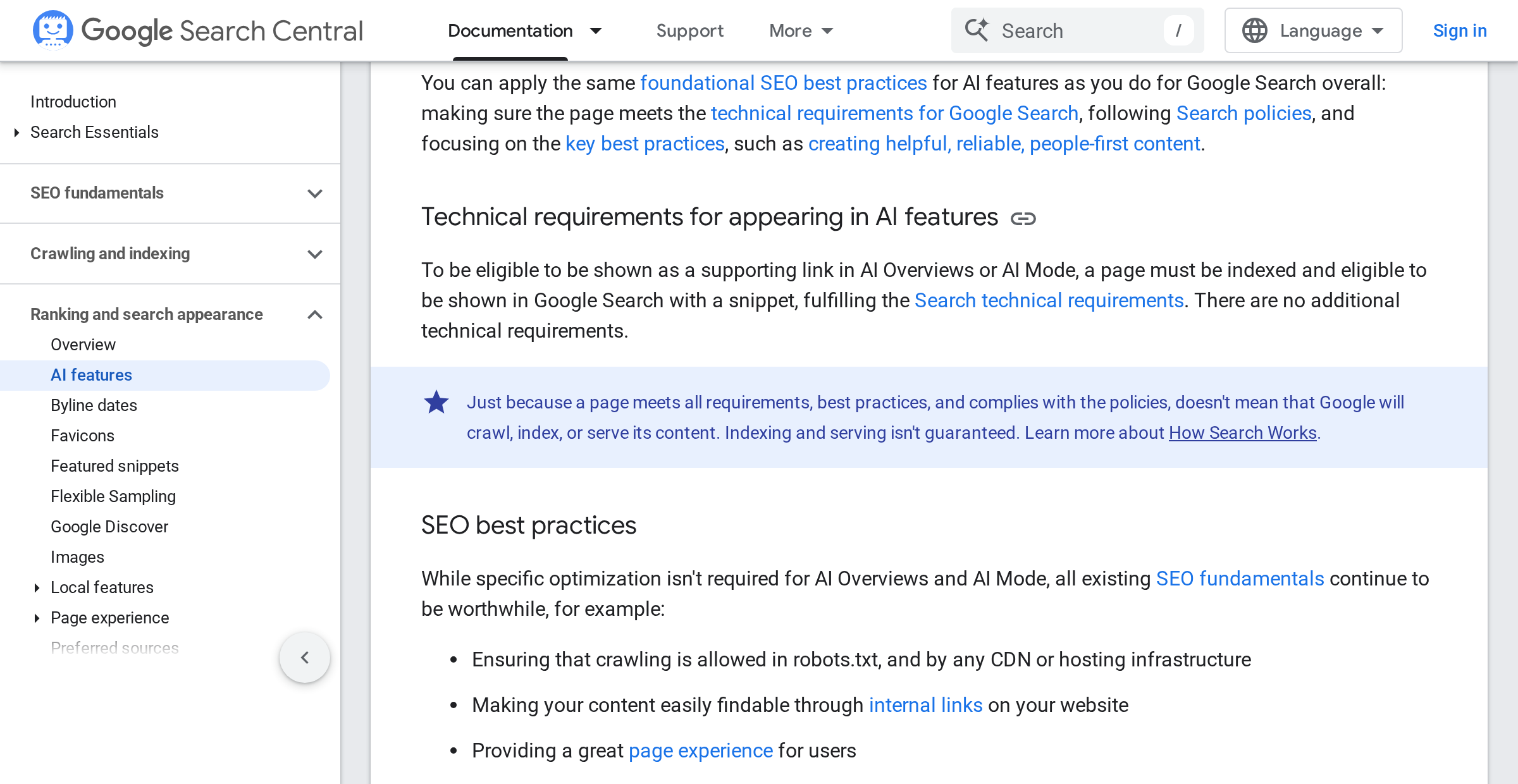
Google's documented position is narrow. John Mueller has said markup will not make a site rank better, and that its effect is to make a page eligible for enhanced display[9]; the developer documentation frames the payoff as rich results that are more engaging and may draw more interaction[3]. For generative features the guidance is blunter still: there is no special schema.org markup to add for AI Overviews or AI Mode[4], and no technical requirement beyond ordinary Search eligibility[10].
Measured effect on AI citations
Ahrefs tracked 1,885 pages that added JSON-LD against 4,000 matched control pages that did not, and reported no major uplift in citations on any platform tested[5]. The treated pages already carried more than 100 AI Overview citations before the change, so the result speaks to pages that were already being cited and not to whether markup helps an uncited page break in[11].
A BrightEdge figure circulated in vendor summaries points the other way, reporting a 44% rise in AI citations for sites that added structured data alongside FAQ blocks[12]. The two findings are not comparable: one is a before-and-after on a fixed page set with controls, the other a correlation across sites that changed more than one thing.
How well models read schema.org
Two results measure the machine end of the vocabulary. On WDC-PAVE, a benchmark of product offers taken from 59 websites that publish schema.org annotations, GPT-4 reached a 91% F1-score extracting attribute values from the unstructured title and description, 10% above the specialised extraction models it was measured against[13]. In the other direction, a 2025 multi-agent system that maps relational tables and columns onto Schema.org terms reported over 90% mapping accuracy across several domains[14]. A model that recovers the properties from prose does not depend on the page publishing them.
Practical position
Markup governs which classic result types a page is eligible for, so it stays load-bearing for rich results and for retailer and event listings. For generative answers the case is weaker than the advice usually given, since engines that fetch a page at answer time read its rendered text and Google states its AI features need no markup of their own[10]. Which sources an engine picks tracks citation patterns and brand mentions more closely than markup coverage. Markup is cheap to add and unambiguous to parse, which is the argument for it that survives the citation studies.
Data
Show the numbers (1)
| Point | % |
|---|---|
| Oct 2024 crawl | 51.25 |
References (14)
- Web Data Commons Extraction Report - October 2024 Corpus Archive
- Web Data Commons Extraction Report - October 2024 Corpus Archive
- Introduction to structured data markup Archive
- AI features and your website Archive
- We Tracked 1,885 Pages Adding Schema. AI Citations Barely Moved. Archive
- Structured data - Web Almanac 2024 Archive
- Structured data - Web Almanac 2024 Archive
- Announcing the Schema.org Usage Statistics Dataset Archive
- Google Confirms That Structured Data Won't Make A Site Rank Better Archive
- AI features and your website Archive
- We Tracked 1,885 Pages Adding Schema. AI Citations Barely Moved. Archive
- AI Search Statistics 2026: 60+ Data Points on Visibility, Citations Archive
- Using LLMs for the Extraction and Normalization of Product Attribute Values
- A Multi-Agent System for Semantic Mapping of Relational Data to Knowledge Graphs
Last updated 2026-09-04. Written and maintained by Baseline Labs.
