llms.txt
The llms.txt proposal asks sites to publish a markdown file at their root giving language models a curated summary and link list, on the argument that a single collated file suits models better than raw site HTML. Jeremy Howard of Answer.AI published it on 3 September 2024[1]. Adoption has grown and readership has not: instances rose 8.8x in the twelve months to May 2026[2], while across 137,210 domains with real traffic 97% of the files served received no requests at all that month[3].
The proposal
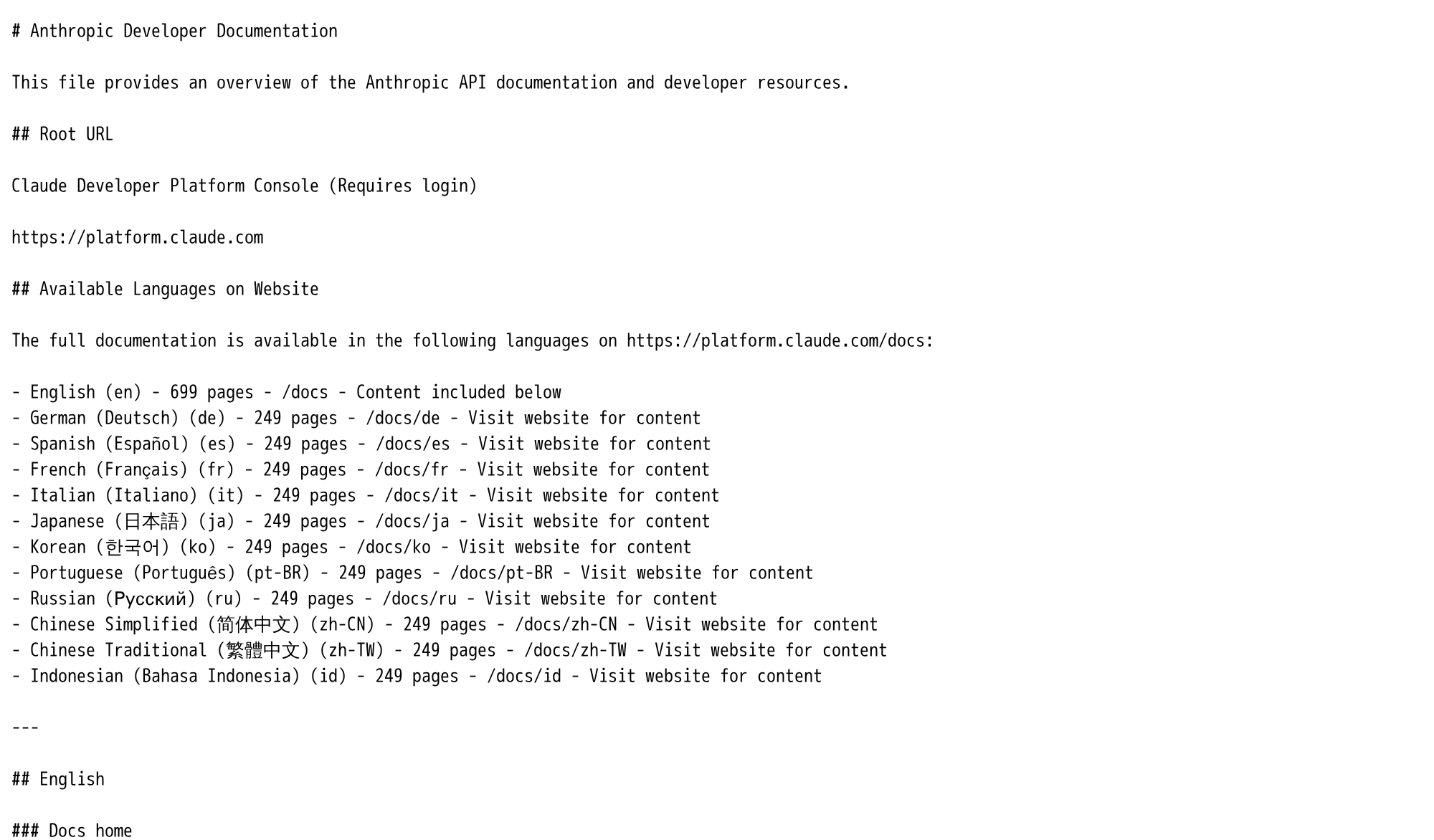
The file is meant to be read at retrieval time, giving a model a concise map of a site instead of raw HTML[1]. Search Engine Land's March 2025 coverage listed Anthropic, Hugging Face, Perplexity and Zapier among the sites already serving one, mostly for their own developer documentation[4].
Adoption
A twelve-month monitoring run across more than 3 million sites counted 4,088 llms.txt instances in June 2025 and 36,120 by May 2026, an 8.8x rise; including the companion llms-full.txt and ai.txt formats the total reaches 38,980 sites[2].
Whether anything reads it
Server logs answer the question directly, and the answer is close to no. Of the requests llms.txt files did receive in the Ahrefs sample, AI bots accounted for 19.5%, the rest being SEO audit tools, general crawlers and unidentified bots[3]. A 14-day log study on one domain recorded 723 robots.txt fetches by 18 named AI crawler families and zero llms.txt fetches[5]. A twelve-week test on 83 sites logged 7 reads by OpenAI's crawler, 9 by Anthropic's and none by Perplexity's, against thousands of robots.txt fetches by the same crawlers; Google's fetched it 67 times and Meta's 193[6]. A 30-day census on one domain found the three largest AI crawlers fetched robots.txt 1,150 times and llms.txt 4 times[7].
Google's position
Why it matters for AI visibility
On the published evidence the file is not a route into an AI answer. Server logs from three independent studies put reads by the named crawlers in single or double digits against thousands of robots.txt fetches over the same window[6], and Google says no AI system uses it[8]. Publishing one costs little and blocks nothing, but it is not a substitute for the things that are read: robots.txt at the door, and pages an engine can fetch and quote.
Data
Show the numbers (5)
| Point | requests |
|---|---|
| OpenAI - llms.txt | 7 |
| Anthropic - llms.txt | 9 |
| Perplexity - llms.txt | 0 |
| Google - llms.txt | 67 |
| Meta - llms.txt | 193 |
References (9)
- /llms.txt - a proposal to provide information to help LLMs use a website - Answer.AI Archive
- llms.txt adoption rises 8.8x but 97% of files get zero AI requests - ppc.land Archive
- We Analyzed 137K Sites: 97% of llms.txt Files Never Get Read - Ahrefs Archive
- Meet llms.txt, a proposed standard for AI website content crawling - Search Engine Land Original
- We Serve an llms.txt. AI Crawlers Hit Our Pages 151 Times in 14 Days - SaaSLinks Archive
- We Put llms.txt on 83 Websites. OpenAI Read It 7 Times. - Ezy.ai Archive
- Google, Anthropic and OpenAI crawlers fetched dejan.ai's robots.txt - Dejan.ai Archive
- Google Says No AI System Currently Uses LLMs.txt - Search Engine Roundtable Archive
- Google Confirms LLMs.txt Has No Current Implementation - Search Engine Journal Archive
Last updated 2026-09-05. Written and maintained by Baseline Labs.
